Colts vs Atlanta Falcons Match Player Stats: Jonathan Taylor’s Historic Day Leads Indianapolis to Overtime Victory
Digging up complete colts vs atlanta falcons match player stats gets messy once a game spills into overtime and the box score gets buried under highlight clips. Casual recaps skip the exact numbers that decide fantasy lineups, betting slips, and locker-room bragging rights.
Every rushing yard, target, and third-down conversion from Indianapolis’ 31-25 win over Atlanta in Berlin is broken down below, pulled directly from the official box score.
1. Title & Intro
The Lead
The Indianapolis Colts beat the Atlanta Falcons 31-25 in overtime on Sunday, November 9, 2025, at Olympiastadion Berlin — the first regular-season NFL game ever played in Germany’s capital. A sold-out crowd packed the historic 1936 Olympic venue, and the Colts needed every second of the extra period to escape with the win, improving to 8-2 and stretching their lead atop the AFC South. Atlanta dropped its fourth straight game, falling to 3-6.
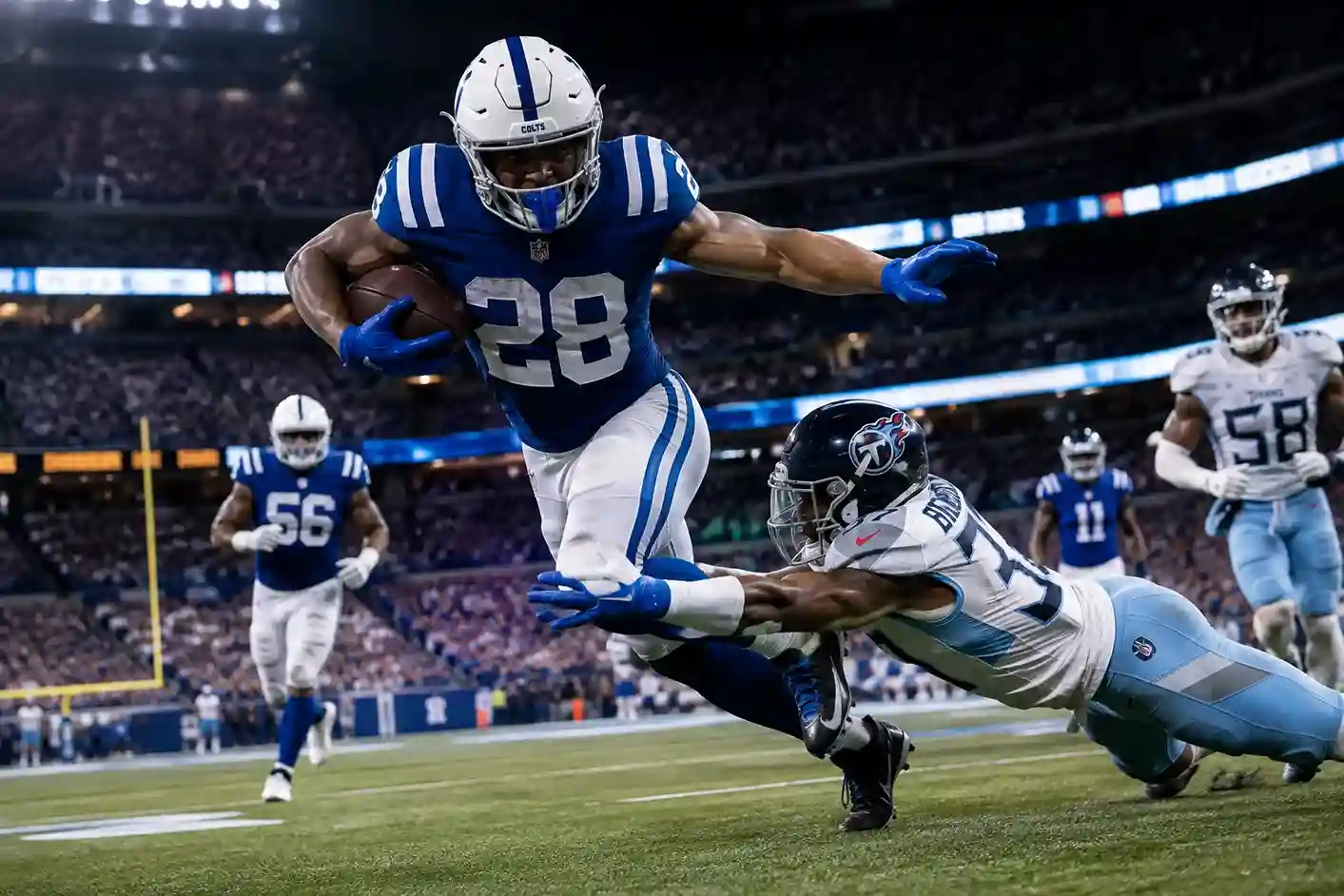
Jonathan Taylor was the story from start to finish. The Colts running back carried the ball 32 times for a season-high 244 yards and three touchdowns, including an 83-yard scamper — the longest run in the NFL all season — and the game-winning 8-yard score in overtime. Atlanta actually forced overtime with a gutsy fourth-quarter comeback, scoring on a Tyler Allgeier touchdown and a two-point conversion to take a 25-22 lead with under two minutes left, only for Colts kicker Michael Badgley to knot the score at 25-25 with a 44-yard field goal as time expired in regulation.
2. Match Overview Table
| Information | Match Details |
| Event | NFL 2025 Season, Week 10 (NFL Berlin Game) |
| Game | Atlanta Falcons vs Indianapolis Colts |
| Date | Sunday, November 9, 2025 |
| Venue | Olympiastadion Berlin, Berlin, Germany |
| Attendance | Sold out (stadium capacity 74,475) |
| Winner | Indianapolis Colts |
| Final Score | 31-25 (Overtime) |
| Broadcast | NFL Network, NFL+ |
3. Core Match Statistics Overview
This Colts vs Falcons box score comparison shows exactly where the game was won and lost in the trenches.
| Team Stat | Atlanta Falcons | Indianapolis Colts |
| Total Yards | 290 | 519 |
| Net Passing Yards | 150 | 196 |
| Rushing Yards | 140 | 323 |
| First Downs | 22 | 25 |
| Third-Down Conversions | 0/8 | 2/12 |
| Fourth-Down Conversions | 0/0 | 2/4 |
| Red Zone Efficiency | 3/3 | 2/4 |
| Turnovers | 1 | 2 |
| Sacks Allowed | 7 (-59 yds) | 3 (-27 yds) |
| Penalties | 3-35 | 7-56 |
| Time of Possession | 26:09 | 40:20 |
Rushing Production Separated These Teams
- Indianapolis piled up 323 rushing yards on just 41 carries, an eye-popping 7.9 yards per attempt.
- Atlanta managed only 140 yards on the ground, and 57 of those came from two short touchdown plunges by Tyler Allgeier.
Third-Down Conversions Told the Real Story
- The Falcons offense went 0-for-8 on third down, an efficiency collapse that kept handing the ball right back to Indianapolis.
- The Colts weren’t sharp either at 2-of-12, but their ground game let them live on manageable second and third downs all afternoon.
Sack Numbers Reveal Two Different Pass-Protection Days
- Atlanta’s front got home seven times for 59 yards, forcing Daniel Jones into several uncomfortable throws.
- Indianapolis’ offensive line allowed only three sacks, giving Michael Penix Jr. an average pocket time of 2.65 seconds before pressure arrived.
Time of Possession Favored Indianapolis by 14 Minutes
- The Colts controlled the ball for 40:20 compared to Atlanta’s 26:09, largely because Jonathan Taylor kept moving the chains.
- That imbalance meant Atlanta’s defense spent far more snaps on the field than its offense — a pattern that showed up in late-game fatigue.
4. Period-by-Period Analysis
First Quarter
| Quarter | Atlanta Falcons | Indianapolis Colts |
| 1st | 7 | 13 |
- Indianapolis struck first on Jonathan Taylor’s 1-yard touchdown run, though a missed extra point kept it at 6-0.
- Atlanta answered immediately with Tyler Allgeier’s own 1-yard score to tie it at 6-6.
- The Colts needed just two plays on their next possession before Daniel Jones hit Alec Pierce for a 37-yard touchdown, pushing Indianapolis in front 13-7.
Second Quarter
| Quarter | Atlanta Falcons | Indianapolis Colts |
| 2nd | 7 | 0 |
- Michael Penix Jr. found Drake London for a 16-yard touchdown to tie the game at 13-13.
- Michael Badgley missed a 53-yard field goal attempt for Indianapolis, a rare missed opportunity in an otherwise efficient day.
- Jessie Bates picked off Daniel Jones just before halftime after the Colts quarterback underthrew Pierce on third-and-11, ending the half with the score deadlocked.
Third Quarter
| Quarter | Atlanta Falcons | Indianapolis Colts |
| 3rd | 3 | 0 |
- Zane Gonzalez connected on a 43-yard field goal to put Atlanta ahead 17-13, its first lead of the game.
- Indianapolis’ offense stalled for most of the period, unable to answer despite the yardage advantage building underneath the surface.
- Atlanta’s defense forced a three-and-out on Indianapolis’ opening drive of the second half, flipping field position in the Falcons’ favor.
Fourth Quarter
| Quarter | Atlanta Falcons | Indianapolis Colts |
| 4th | 8 | 12 |
- Michael Badgley’s 34-yard field goal cut the gap to 17-16 before Jonathan Taylor exploded for an 83-yard touchdown run, the longest of the entire NFL season, to make it 22-17.
- A failed two-point conversion attempt left the door open, and Atlanta walked through it: Tyler Allgeier scored his second touchdown of the day, and Drake London converted the two-point pass from Penix to put the Falcons up 25-22 with 1:44 remaining.
- Michael Badgley delivered under pressure, drilling a 44-yard field goal as time expired in regulation to tie it at 25-25 and force overtime.
Overtime
| Period | Atlanta Falcons | Indianapolis Colts |
| OT | 0 | 6 |
- Indianapolis won the coin toss and methodically drove into scoring range behind Taylor’s legs.
- Jonathan Taylor capped the possession with an 8-yard touchdown run, sealing the 31-25 win.
- Atlanta’s defense, worn down after 74 offensive snaps allowed to the Colts, couldn’t get a stop when it mattered most.
5. Detailed Team Player Statistics
Indianapolis Colts Player Statistics
| Player | Stat Line |
| Jonathan Taylor (RB) | 32 CAR, 244 YDS, 7.6 AVG, 3 TD |
| Daniel Jones (QB) | 19/26, 255 YDS, 1 TD, 1 INT, 100.6 RTG |
| Tyler Warren (TE) | 8 REC, 99 YDS |
| Alec Pierce (WR) | 4 REC/7 TGT, 84 YDS, 1 TD |
Jonathan Taylor authored one of the best individual rushing performances of his career, becoming just the fourth player in NFL history to post multiple 200-yard, three-touchdown rushing games. Daniel Jones threw for 255 yards and a touchdown but was picked off once and sacked seven times, leaning on his legs and his running back to survive an uneven day through the air.
Tyler Warren, Indianapolis’ rookie tight end, set a career high with 8 catches for 99 yards, including a contested fourth-down conversion late in regulation that kept the tying drive alive. Alec Pierce’s 37-yard touchdown grab in the first quarter was the Colts’ biggest explosive pass play and came on Indianapolis’ only two-play, 65-yard drive of the day.
Atlanta Falcons Player Statistics
| Player | Stat Line |
| Michael Penix Jr. (QB) | 12/28, 177 YDS, 1 TD, 0 INT, 76.0 RTG |
| Bijan Robinson (RB) | 17 CAR, 84 YDS, 4.9 AVG, 0 TD |
| Drake London (WR) | 6 REC/8 TGT, 104 YDS, 1 TD |
| Tyler Allgeier (RB) | 11 CAR, 57 YDS, 2 TD |
Michael Penix Jr. completed less than 43% of his passes and lost a first-quarter fumble that set up an Indianapolis score, though he did engineer the fourth-quarter comeback that forced overtime. Bijan Robinson was steady but unspectacular, averaging under 5 yards per carry and failing to find the end zone.
Drake London was Atlanta’s most productive weapon, topping 100 receiving yards for the fourth time in five games and adding a two-point conversion catch in the fourth quarter. Tyler Allgeier did the dirty work near the goal line, scoring both of Atlanta’s rushing touchdowns on short-yardage plunges.
6. Statistical Leaders Summary Table
| Category | Atlanta Falcons | Indianapolis Colts |
| Leading Rusher | Bijan Robinson (84 yds) | Jonathan Taylor (244 yds, 3 TD) |
| Leading Passer | Michael Penix Jr. (177 yds, 1 TD) | Daniel Jones (255 yds, 1 TD, 1 INT) |
| Leading Receiver (Yards) | Drake London (104 yds, 1 TD) | Alec Pierce (84 yds, 1 TD) |
| Most Receptions | Drake London (6) | Tyler Warren (8) |
7. Analytical Breakdowns: Why They Won / Why They Lost
Why the Colts Won
Jonathan Taylor Dominated on the Ground
| Metric | Falcons Defense Allowed |
| Rushing Yards | 323 |
| Yards Per Carry | 7.9 |
| Rushing Touchdowns | 3 |
Taylor’s 244-yard, 3-touchdown day gave Indianapolis a run game Atlanta simply had no answer for, and it set up nearly every other part of the offensive game plan.
Time of Possession Wore Atlanta Down
Indianapolis held the ball for over 40 minutes, running 74 offensive plays to Atlanta’s 60. That workload compounded over four quarters, and Atlanta’s defense looked gassed by the time overtime arrived.
Clutch Execution in Crunch Time
Tyler Warren’s fourth-down catch and Michael Badgley’s game-tying 44-yard field goal as time expired were the two plays that kept Indianapolis alive when Atlanta had all the momentum.
Overtime Poise
The Colts won the coin toss and never let Atlanta’s offense back on the field, closing the game on a scripted, methodical touchdown drive capped by Taylor’s third score of the day.
Why the Falcons Lost
Third-Down Offense Went Ice Cold
Atlanta finished 0-for-8 on third down, an efficiency number that made it nearly impossible to sustain drives or keep Indianapolis’s offense off the field.
A First-Quarter Fumble Set the Tone
Michael Penix Jr.’s lost fumble on Atlanta’s opening drive gave Indianapolis a short field and an early lead the Falcons spent the rest of the game chasing.
Heavy Dependence on Two Playmakers
Outside of Drake London’s 104 yards and Tyler Allgeier’s two short touchdowns, Atlanta’s supporting cast — including a drop from Kyle Pitts — didn’t generate enough explosive plays to match Indianapolis’s balanced attack.
8. Historical Context & Advanced Insights
Season Series Breakdown
| Matchup | Date | Result |
| Falcons at Colts (NFL Berlin Game) | November 9, 2025 | Colts win, 31-25 (OT) |
Atlanta and Indianapolis play in different conferences and only meet based on the NFL’s rotating schedule, so this was their lone matchup of the 2025 season.
Advanced Statistical Insights
The gap in yards per play (7.0 for Indianapolis vs. 4.8 for Atlanta) explains why the Colts moved the chains even when their third-down numbers weren’t sharp — they simply gained more on first and second down, keeping manageable distances in front of them. Atlanta’s offense, by contrast, leaned almost entirely on chunk plays through the air (the 16-yard London touchdown and several other intermediate completions) because its rushing attack, averaging just 4.8 yards per carry, couldn’t consistently move the sticks on early downs. That’s a big reason Atlanta went 0-for-8 on third down despite having a Pro Bowl-caliber receiver in London: without positive rushing gains, the Falcons kept facing third-and-long.
9. Game Implications & Key Lessons
What This Means for the Colts
- Indianapolis improves to 8-2, holding a commanding lead in the AFC South heading into its bye week.
- Jonathan Taylor’s performance reinforces his case as a leading MVP candidate for the 2025 season.
- The offensive line’s pass protection (just 3 sacks allowed) gives the coaching staff confidence heading into the second half of the schedule.
What This Means for the Falcons
- Atlanta has now lost four straight and sits at 3-6, putting real pressure on the coaching staff to fix third-down execution.
- Michael Penix Jr.’s turnover and 42.9% completion rate are areas that need correcting before the losing streak becomes a lost season.
- The run defense allowed 323 yards and averaged giving up nearly 8 yards a carry — a major red flag going into upcoming matchups.
Key Lessons
- Explosive rushing plays can offset a shaky third-down conversion rate if the yards-per-play gap is wide enough.
- Time of possession compounds over four quarters and can decide games that look competitive on the scoreboard.
- A single early turnover can hand the opponent field position that shapes the entire game script.
- Fourth-down conversions in the final minutes carry outsized value compared to their raw stat-sheet impact.
- Special teams — specifically a clutch field goal under pressure — can single-handedly force overtime or seal a win.
- Relying on one or two skill players without a complementary run game leaves an offense vulnerable when the passing lanes get contested.
10. SEO FAQ & Conclusion
Who won the Colts vs Falcons game?
The Indianapolis Colts won 31-25 in overtime over the Atlanta Falcons on November 9, 2025.
What were Jonathan Taylor’s stats in the Colts vs Falcons game?
Jonathan Taylor rushed 32 times for 244 yards and 3 touchdowns, including an 83-yard run and the game-winning score in overtime.
How many yards did Daniel Jones throw for?
Daniel Jones completed 19 of 26 passes for 255 yards, 1 touchdown, and 1 interception.
What were Drake London’s stats against the Colts?
Drake London caught 6 of 8 targets for 104 yards and a touchdown, plus a two-point conversion in the fourth quarter.
Did the Colts vs Falcons game go to overtime?
Yes. Atlanta forced overtime by scoring a touchdown and two-point conversion in the final two minutes, but Michael Badgley’s field goal tied the game and Jonathan Taylor won it in the extra period.
Where was the Colts vs Falcons game played?
The game was played at Olympiastadion Berlin in Berlin, Germany — the first regular-season NFL game ever held in the city.
Conclusion
Indianapolis’s 31-25 overtime win came down to one team that could pound the ball on early downs and one that couldn’t get off the field on third down. Jonathan Taylor’s historic rushing day carried the offense, but it was the balance between a dominant ground game and just enough execution in the clutch — Tyler Warren’s fourth-down grab, Michael Badgley’s tying field goal — that outlasted Atlanta’s more top-heavy attack. Efficiency and complementary football won out over individual flash in Berlin.