Most highlight reels reduce the 2010 FIFA World Cup final to eight seconds: Fàbregas slides a pass, Iniesta strikes, Spain wins. That leaves out 116 minutes of context that actually explains the result. Without the shot counts, the card tally, and the passing numbers, it’s easy to call Spain’s win a fluke instead of what the data shows — a slow, controlled squeeze that finally cracked in extra time.
The Lead: Spain’s First World Cup, Written in Extra Time
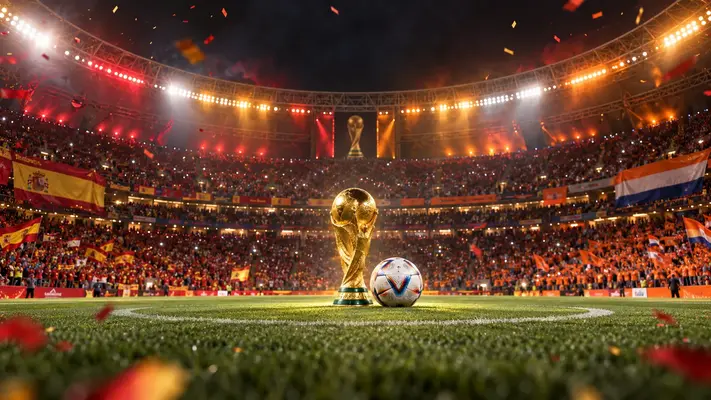
On July 11, 2010, Spain and the Netherlands walked out at Soccer City (also known as FNB Stadium) in Johannesburg for the FIFA World Cup final, with 84,490 fans packed into the stands and hundreds of millions watching worldwide on ABC, ESPN, and dozens of other global broadcasters. Neither side had ever lifted the trophy before, which meant the match was always going to produce a first-time champion. What followed was a tight, foul-heavy 0-0 stalemate through 90 minutes and into extra time, decided only in the 116th minute when Andrés Iniesta buried a right-footed strike off a Cesc Fàbregas assist to make it 1-0.
Spain didn’t win by overwhelming the Netherlands with chances — their finishing was actually below expectation for most of the night. They won by controlling the ball (57% possession), forcing 19 Dutch fouls, and eventually playing with a numerical advantage after Netherlands defender Johnny Heitinga picked up a second yellow card in the 109th minute for a foul on Iniesta. Arjen Robben had the game’s two clearest chances, both one-on-one with Iker Casillas, and missed both. That, more than anything else in the box score, decided the 2010 FIFA World Cup final.
Match Overview Table
| Information | Match Details |
| Event | 2010 FIFA World Cup Final |
| Game | Netherlands vs Spain |
| Date | July 11, 2010 |
| Venue | Soccer City (FNB Stadium), Johannesburg, South Africa |
| Attendance | 84,490 |
| Winner | Spain |
| Final Score | 1-0 (AET) |
| Broadcast | ABC, ESPN, ESPN 3D (US); global broadcast via FIFA’s international rights partners |
Core Match Statistics Overview
| Stat | Netherlands | Spain |
| Possession | 43% | 57% |
| Total Shots | 13 | 19 |
| Shots on Target | 5 | 6 |
| Corners | 6 | 8 |
| Fouls Committed | 28 | 19 |
| Yellow Cards | 8 | 5 |
| Red Cards | 1 | 0 |
| Saves | 5 | 5 |
Possession and Territory
- Spain’s 57% possession figure was actually one of their lower marks of the tournament — they’d topped 60% in several earlier rounds.
- Even with less of the ball, the Netherlands generated the two best individual chances of the match through Robben, proving possession alone didn’t decide the game.
Shooting Efficiency
- Spain out-shot the Netherlands 19-13 but managed just one goal from 25 combined attempts between both sides — a reminder of how well both defenses played.
- David Villa, Spain’s top scorer heading into the final, finished with six shots and zero on target, showing how tightly the Dutch back line closed him down.
Discipline and Fouls
- Referee Howard Webb showed 14 total cards (13 yellow, 1 red) — a record for a World Cup final that still stands as one of the most cited numbers from this match.
- The Netherlands committed 28 fouls to Spain’s 19, a gap that reflected their game plan of disrupting Spain’s passing rhythm rather than matching it.
Set Pieces and Corners
- Spain edged corners 8-6, giving aerial targets like Sergio Ramos and Gerard Piqué extra late chances to break the deadlock.
- Ramos actually had the clearest headed opportunity of the second half, in the 76th minute, sending a Xavi corner over the crossbar.
Period-by-Period Analysis
First Half (0-45′)
| Period | Netherlands | Spain |
| Score | 0 | 0 |
- Spain started in control, working the ball patiently, but couldn’t turn possession into clean chances against a disciplined Dutch back line.
- Sergio Ramos headed a Xavi cross on target in the 5th minute, forcing an early save from Maarten Stekelenburg.
- The Netherlands leaned on physical, disruptive play, with Nigel de Jong’s chest-high challenge on Xabi Alonso in the 28th minute becoming one of the most talked-about moments of the tournament despite drawing only a yellow card.
Second Half (45-90′)
| Period | Netherlands | Spain |
| Score | 0 | 0 |
- The match stayed goalless but grew more dangerous, with Robben breaking clear on Casillas in the 62nd minute only to see his shot cleared off the line.
- Cards piled up as the Dutch picked up bookings for Heitinga (55′) and later Robben (84′) amid persistent stoppages.
- Fàbregas came on for Spain in the 87th minute, adding fresh legs to a midfield that would need every ounce of energy in extra time.
Extra Time (91-120′)
| Period | Netherlands | Spain |
| Score | 0 | 1 |
- Robben got in behind again early in extra time and was denied a second time by Casillas, arguably the moment that decided the trophy.
- Heitinga’s second yellow card in the 109th minute, for fouling Iniesta, left the Netherlands to play the final stretch with ten men.
- Fàbregas split the shorthanded Dutch defense in the 116th minute, and Iniesta finished from close range for the only goal of the match.
Detailed Team Player Statistics
Spain Player Statistics
Andrés Iniesta — Match Winner
- Goals: 1
- Shots: 2
- Match rating: 8.4
Iniesta was quiet for long stretches before delivering the single most important moment of Spain’s football history, timing his run into the box perfectly to meet Fàbregas’ pass.
Xavi Hernández — Midfield Conductor
- Passes attempted: 97
- Passes completed: 90 (92.8% accuracy)
- Match rating: 8.2
Xavi’s passing numbers were the engine behind Spain’s control, and his 130 total touches were among the highest recorded by any player in the entire tournament.
Iker Casillas — Goalkeeper
- Saves: 4
- Goals conceded: 0
Casillas made two decisive one-on-one saves against Robben in the second half and extra time, both of which kept the score level until Iniesta’s goal.
David Villa — Forward
- Shots: 6
- Shots on target: 0
- Goals: 0
Villa didn’t add to his tournament-leading five goals in the final, but his movement pulled Dutch defenders out of position and opened space for others.
Netherlands Player Statistics
Wesley Sneijder — Attacking Midfielder
- Shots: 5
- Shots on target: 1
- Goals: 0
Sneijder, tied for the tournament’s goal-scoring lead heading into the final, was kept largely quiet by Spain’s midfield press and never found his usual rhythm.
Arjen Robben — Winger
- Clear one-on-one chances: 2
- Goals: 0
Robben produced the two best chances of the match in the 62nd and early extra-time minutes, and both misses became the defining “what if” of the Dutch campaign.
Mark van Bommel — Defensive Midfielder
- Passes attempted: 50
- Passes completed: 31 (62% accuracy)
Van Bommel’s job was disruption rather than distribution, and his lower pass accuracy reflected a midfield built around stopping Spain rather than building attacks.
Maarten Stekelenburg — Goalkeeper
- Saves: 3
- Goals conceded: 1
Stekelenburg had little chance on Iniesta’s strike and made a smart early save on Ramos’ header, but couldn’t do enough to keep the Dutch in the final.
Statistical Leaders Summary Table
| Category | Netherlands | Spain |
| Leading Scorer | — (no goals scored) | Andrés Iniesta (1) |
| Most Shots | Wesley Sneijder (5) | David Villa (6) |
| Top Passer | Mark van Bommel (50 attempted) | Xavi Hernández (97 attempted) |
| Goalkeeper Saves | Maarten Stekelenburg (3) | Iker Casillas (4) |
Why Spain Won / Why the Netherlands Lost
Why Spain Won
Possession as a Defensive Weapon Spain’s 57% possession share did more than create chances — it limited how often the Netherlands could organize their disruptive game plan, keeping the ball away from a Dutch side built to counter.
Elite Individual Goalkeeping
| Player | Saves | Goals Conceded |
| Iker Casillas | 4 | 0 |
| Maarten Stekelenburg | 3 | 1 |
Casillas’ two stops on Robben were the difference between a scoreless draw heading to penalties and a Spain victory in regulation extra time.
Discipline Under Pressure Spain committed nine fewer fouls (19 vs 28) and picked up three fewer cards than the Netherlands, staying composed through a match that Howard Webb struggled to control.
Why the Netherlands Lost
Missed Clear-Cut Chances Robben’s two one-on-one misses against Casillas remain the single biggest factor in the loss — teams that create the game’s best chances and don’t convert rarely win World Cup finals.
Playing Down a Man Too Early Heitinga’s red card in the 109th minute forced the Netherlands to defend the final stretch of extra time with ten players against a Spain side that had just brought on fresh legs in Fàbregas.
Historical Context and Advanced Insights
Road to the Final
| Team | Group Stage | Round of 16 | Quarterfinal | Semifinal |
| Spain | Lost to Switzerland, then won 2 straight | Beat Portugal 1-0 | Beat Paraguay 1-0 | Beat Germany 1-0 |
| Netherlands | Won all 3 group games | Beat Slovakia 2-1 | Beat Brazil 2-1 | Beat Uruguay 3-2 |
Spain’s path was a string of 1-0 wins built on defense and patience, while the Netherlands scored more freely but needed a second-half comeback against Brazil to reach the final.
Advanced Statistical Insight: Shots-to-Goals Ratio
Across the full match, Netherlands and Spain combined for 32 shots and produced just one goal — a conversion rate under 4%. Spain’s own tournament-wide numbers back this up: they finished the 2010 World Cup with the fewest goals (8) ever scored by a champion relative to shots taken, winning on structure and control rather than clinical finishing.
Game Implications and Key Lessons
What This Means for Spain
- The win completed a golden generation’s résumé, adding a first World Cup to the Euro 2008 title already in hand.
- It validated Spain’s possession-based approach as a tournament-winning system, influencing how national teams built midfields for years afterward.
What This Means for the Netherlands
- The loss extended their record as World Cup finalists without a title, a frustration that would carry into the 2014 tournament.
- Robben’s two missed chances became a cautionary example in finishing under pressure, discussed in Dutch football for years after the final.
Key Lessons from the Match
- Possession matters, but it only wins games when paired with defensive discipline, as Spain showed by limiting the Netherlands to five shots on target.
- Elite goalkeeping in one-on-one situations can single-handedly decide a final, as Casillas proved twice against Robben.
- Discipline compounds — the Netherlands’ 28 fouls eventually cost them a player and, with it, control of extra time.
- Fresh substitutes can change a final in the closing stages, as Fàbregas showed by both creating and assisting the winning goal within 30 minutes of coming on.
- Missed chances are remembered longer than any other stat line in a final this close.
FAQs
Who won the 2010 FIFA World Cup final?
Spain won 1-0 in extra time over the Netherlands at Soccer City in Johannesburg on July 11, 2010.
In the 2010 World Cup final, who scored the winning goal?
Andrés Iniesta scored the only goal of the match in the 116th minute, assisted by substitute Cesc Fàbregas.
What was the 2010 World Cup final score?
Spain 1, Netherlands 0, after extra time.
How many cards were shown in the 2010 World Cup final?
Referee Howard Webb showed 14 total cards — 13 yellow and 1 red — a record for a World Cup final.
Who had the best individual chances in the match?
Arjen Robben had two clear one-on-one chances against Iker Casillas and missed both, in the 62nd minute and early in extra time.
How did the two teams divide up the possession?
Spain held 57% possession to the Netherlands’ 43% across the full 120 minutes.
Conclusion
The 2010 FIFA World Cup final wasn’t decided by a flurry of goals — it came down to two missed Robben chances, two big Casillas saves, and a red card that finally opened the game up in extra time.
Spain’s possession and discipline outlasted a Dutch side built to disrupt rather than dominate, and when Fàbregas found Iniesta in the 116th minute, the numbers behind the whole tournament finally matched the result on the scoreboard.