Golden State Warriors vs Utah Jazz Match Player Stats: Curry’s 31 Points Leads Warriors to Blowout Win
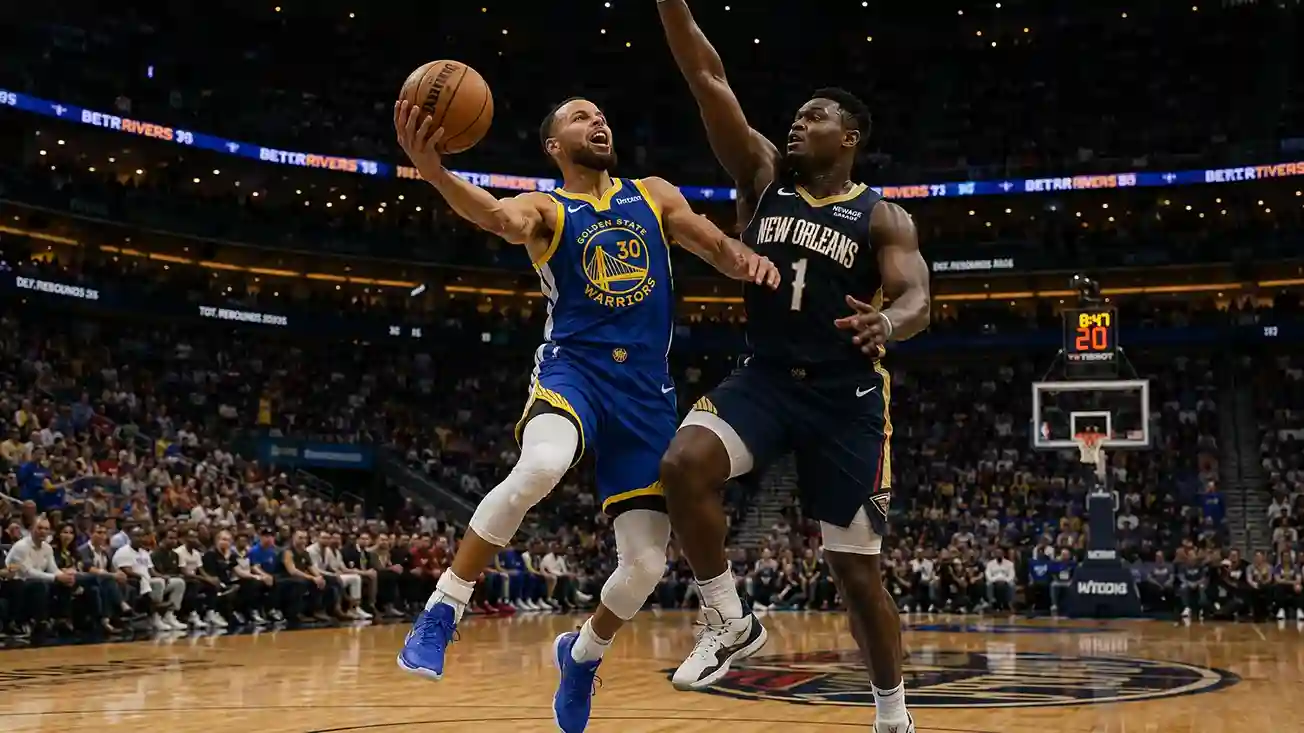
Chasing your third straight loss is never fun, and that’s exactly the hole Golden State climbed out of on a Monday night at Chase Center. A slow, sloppy start had the Warriors down 11-0 before they’d made a shot. Down the stretch, Stephen Curry and a bench mob that dropped 52 points turned the game into a laugher. Here’s the full golden state warriors vs utah jazz match player stats breakdown from the 134-117 final.
The Lead
The Golden State Warriors hosted the Utah Jazz on Monday, November 24, 2025, at Chase Center in San Francisco, and 18,064 fans watched Golden State pull away for a 134-117 win. The Jazz actually controlled the opening stretch, building an 11-0 lead before Golden State had recorded a single made shot, and Utah led 35-26 after the first quarter. Everything flipped in the second period.
Golden State outscored Utah 41-20 in the second quarter alone, igniting an 18-0 run that erased the deficit and put the Warriors ahead for good. Curry made six 3-pointers and finished with 31 points on 12-of-24 shooting, his fifth 30-point outing in six games. Jimmy Butler added 18 points, seven assists, and six rebounds, while Buddy Hield came off the bench for 20 points to power a Golden State reserve unit that combined for 52. Keyonte George kept Utah competitive with 28 points and seven assists, but the Jazz never got closer than nine in the second half and dropped their fourth straight game.
Match Overview Table
| Information | Match Details |
| Event | NBA Regular Season, 2025-26 |
| Game | Utah Jazz vs Golden State Warriors |
| Date | Monday, November 24, 2025 |
| Venue | Chase Center, San Francisco, CA |
| Attendance | 18,064 |
| Winner | Golden State Warriors |
| Final Score | Warriors 134, Jazz 117 |
| Broadcast | NBC Sports Bay Area (GSW); KJZZ-TV, Jazz+, NBA League Pass (UTA) |
Core Match Statistics Overview
The Golden State Warriors vs Utah Jazz box score tells a simple story: Golden State was sharper everywhere that mattered, especially from deep and at the free-throw line.
| Team Stat | Utah Jazz | Golden State Warriors |
| Field Goal % | 47% (47-99) | 49% (51-104) |
| Three-Point % | 31% (11-36) | 37% (19-52) |
| Free Throw % | 67% (12-18) | 72% (13-18) |
| Total Rebounds | 47 | 50 |
| Turnovers | 14 | 10 |
| Largest Lead | 11 | 26 |
| Bench Points | — | 52 |
Three-Point Shooting
- Golden State connected on 19 of 52 attempts from deep (37%) compared to Utah’s 11-of-36 clip (31%), and Curry’s six makes alone were more than half the Jazz’s total output from beyond the arc.
- Buddy Hield’s four triples off the bench turned the game from competitive into a rout, and that kind of second-unit shooting is exactly what fuels a Warriors NBA player stats sheet built around volume 3-point attempts.
Ball Control and Turnovers
- Golden State committed only 10 turnovers while forcing 17 out of Utah, converting those extra possessions into 14 points.
- Utah’s 14 giveaways handed the Warriors’ transition attack easy scoring chances, especially once Golden State’s defense started applying pressure in the second quarter.
Free Throw Efficiency
- The Warriors shot 72% (13-of-18) from the line compared to Utah’s 67% (12-of-18), a modest gap that still mattered in a game decided by 17 points.
- Neither team lived at the free-throw line, which meant field-goal efficiency, not fouls drawn, decided the final margin.
Bench Production
- Golden State’s reserves outscored Utah’s bench by a wide margin, with Hield’s 20 points leading a 52-point night for players coming off the pine.
- That bench scoring depth is becoming a recurring theme in Golden State Warriors match player stats this season, particularly with Draymond Green sidelined.
Period-by-Period Analysis
| Quarter | Utah Jazz | Golden State Warriors |
| 1st | 35 | 26 |
| 2nd | 20 | 41 |
| 3rd | 29 | 39 |
| 4th | 33 | 28 |
| Final | 117 | 134 |
- Utah jumped out to an 11-0 start behind three-pointers from Ace Bailey and Lauri Markkanen, missing their initial six shots as a team, and the Jazz carried a nine-point cushion into the second quarter.
- Golden State completely reversed the game with an 18-0 run to open the second period, sparked by Will Richard and Moses Moody before Curry and Hield finished it off; the Warriors’ 41-point quarter buried Utah by halftime, 67-55.
- The third quarter saw Golden State extend the lead to as many as 26 points before Utah trimmed the margin in mostly meaningless fourth-quarter minutes once Golden State’s bench took over.
Golden State Warriors Player Statistics
Stephen Curry — 31 points, 12-24 FG, 6 made 3-pointers, 3 rebounds, 2 assists, 3 steals Curry set the tone from the perimeter, drilling six triples and scoring his fifth 30-point game in six outings. His scoring burst in the second and third quarters was the single biggest factor in erasing Utah’s early lead.
Jimmy Butler — 18 points, 7 assists, 6 rebounds (5 defensive, 1 offensive) Butler operated as the offense’s connective tissue, setting up teammates while still attacking downhill for easy buckets. His playmaking kept Golden State’s ball movement humming even when Curry’s shot cooled briefly in stretches.
Buddy Hield — 20 points off the bench, 4 made 3-pointers Hield was the engine behind Golden State’s 52-point bench output, catching fire from deep once Utah’s defense collapsed toward Curry and Butler.
Gary Payton II — 9 points, career-best 8 assists, 6 rebounds, 0 turnovers in a rare start Filling in with Draymond Green sidelined, Payton II delivered a career night as a facilitator, finishing with zero turnovers across 21 minutes while setting up teammates all over the floor.
Utah Jazz Player Statistics
Keyonte George — 28 points, 10-17 FG, 7 assists, 6 rebounds, 2 turnovers George was Utah’s best player by a wide margin, shooting an efficient 59% from the field while also running the offense as the team’s primary ball-handler.
Ace Bailey — 21 points, 8-15 FG Bailey provided secondary scoring punch, hitting shots from all three levels and staying aggressive even as the deficit grew in the second half.
Lauri Markkanen — 17 points on 19 shot attempts Markkanen struggled to find rhythm, needing nearly 20 attempts to reach 17 points, a continuation of an inefficient stretch for Utah’s typical top scorer.
Statistical Leaders Summary Table
| Category | Utah Jazz | Golden State Warriors |
| Leading Scorer | Keyonte George (28) | Stephen Curry (31) |
| Second Leading Scorer | Ace Bailey (21) | Buddy Hield (20) |
| Top Rebounder | Keyonte George (6) | Jimmy Butler (6) |
| Most Assists/Playmaker | Keyonte George (7) | Gary Payton II (8) |
Why the Warriors Won
Second-Quarter Explosion
- Golden State’s 41-point second quarter, built on an 18-0 run, was the single biggest swing of the game and completely reset the scoreboard.
- Utah scored just 20 points in that same period, unable to find any answer defensively once Golden State’s shooting heated up.
| Second Quarter | Utah | Golden State |
| Points | 20 | 41 |
Bench Scoring Advantage
- Golden State’s reserves produced 52 points compared to a far smaller total from Utah’s bench, giving the Warriors scoring balance beyond their starters.
- Hield’s 20-point night off the pine meant Golden State never had to lean solely on Curry and Butler to stay ahead.
Superior Three-Point Shooting
- The Warriors shot 37% from deep on 52 attempts, well ahead of Utah’s 31% clip, and that volume advantage from beyond the arc created the separation that mattered most.
| Three-Point Shooting | Utah | Golden State |
| 3PT % | 31% (11-36) | 37% (19-52) |
Takeaway Protection
- Committing only 10 turnovers while forcing 17 gave Golden State a possession advantage that translated directly into extra scoring chances.
Why the Jazz Lost
Costly First-Quarter Complacency
- Utah’s fast 11-0 start masked a lack of sustained execution, and once Golden State settled in, the Jazz had no answer for the shift in pace and physicality.
Turnover Problems
- Utah’s 14 turnovers, against a Warriors defense that scored 14 points directly off those giveaways, wiped out much of the efficiency George and Bailey generated on the other end.
Inefficient Secondary Scoring
- Markkanen’s 17 points on 19 attempts represented a substantial dip in efficiency from a player Utah normally counts on for high-volume scoring, and that inefficiency limited Utah’s margin for error once Golden State’s role players got going.
Historical Context and Advanced Insights
Season Series Breakdown
| Meeting | Date | Result |
| Game 1 | November 24, 2025 | Warriors 134, Jazz 117 |
| Game 2 | January 28, 2026 | Warriors 140, Jazz 124 |
Golden State swept both regular-season meetings against Utah in 2025-26, with Curry topping 27 points in each matchup. The Warriors also extended a home winning streak against the Jazz that dates back to a 129-96 Utah road win in January 2020, meaning Golden State had won 10 straight at Chase Center against this opponent heading into the night.
Advanced Statistical Insights
Assist-to-turnover ratio told much of the story in this Golden State Warriors vs Utah Jazz box score. Golden State’s Gary Payton II posted eight assists against zero turnovers, an efficiency mark that’s rare even for starting point guards, let alone a wing filling in for an absent starter. Compare that to Utah’s team-wide 14 turnovers against just a handful of extra possessions gained defensively, and the picture becomes clear: Golden State simply protected the ball better on a possession-by-possession basis, which matters more than raw shooting percentage in games this close on paper but lopsided on the scoreboard. Golden State’s 49% shooting on 104 attempts against Utah’s 47% on 99 attempts also reflects a shot-quality edge born from that ball security, since fewer live-ball turnovers meant more clean, set possessions in the halfcourt for Curry and Butler to work with.
Game Implications and Key Lessons
What This Means for Golden State
- The win pushed the Warriors to 10-9, snapping a three-game losing streak and stabilizing a rotation that’s had to adjust around Draymond Green’s absence.
- Payton II’s career-high assist night suggests Golden State has a viable stopgap playmaker if Green misses extended time.
What This Means for Utah
- The loss dropped Utah to 5-12, its fourth straight defeat and fifth in six games, a stretch that points to deeper depth and consistency issues beyond just one bad quarter.
- Markkanen’s shooting slump is a trend worth monitoring, since Utah’s offense leans heavily on his scoring efficiency to stay competitive against stronger opponents.
Key Lessons
- A hot start doesn’t guarantee a win if it isn’t backed by sustained defensive intensity for all four quarters.
- Bench scoring depth can single-handedly change a game’s outcome, as Golden State’s 52-point reserve output proved.
- Turnover margin remains one of the most predictive stats for who wins a back-and-forth NBA game.
- Efficient facilitating, not just scoring, can be the difference-maker for a role player stepping into a bigger role.
- Three-point volume paired with accuracy creates separation that’s difficult for an opponent to close once a big run gets started.
- Individual scoring outbursts, like George’s 28 points, aren’t enough to overcome team-wide execution gaps.
Frequently Asked Questions
Who won the Golden State Warriors vs Utah Jazz game on November 24, 2025?
The Golden State Warriors won 134-117 at Chase Center in San Francisco.
Who scored the most points in the Warriors vs Jazz game?
Stephen Curry led all scorers with 31 points on 12-of-24 shooting, including six 3-pointers.
What were Keyonte George’s stats in the loss to Golden State?
George finished with 28 points on 10-of-17 shooting, seven assists, and six rebounds for Utah.
How many points did the Golden State Warriors bench score?
Golden State’s reserves combined for 52 points, led by Buddy Hield’s 20-point performance off the bench.
What was the score at halftime?
Golden State led 67-55 at the break after outscoring Utah 41-20 in the second quarter.
Did Draymond Green play in this game?
No, Green was sidelined by a sprained right foot, which opened a rare starting opportunity for Gary Payton II, who responded with a career-high eight assists.
Conclusion
This Golden State Warriors vs Utah Jazz match player stats breakdown shows a game decided less by star power and more by depth and discipline. Curry’s scoring got the headlines, but it was Golden State’s bench production, ball security, and an efficient facilitator in Gary Payton II that turned a nine-point deficit into a comfortable 17-point win.
Utah’s George put together a strong individual outing, but without support from Markkanen’s usual scoring punch and with 14 turnovers weighing down the offense, the Jazz simply couldn’t keep pace with a more balanced Warriors attack.